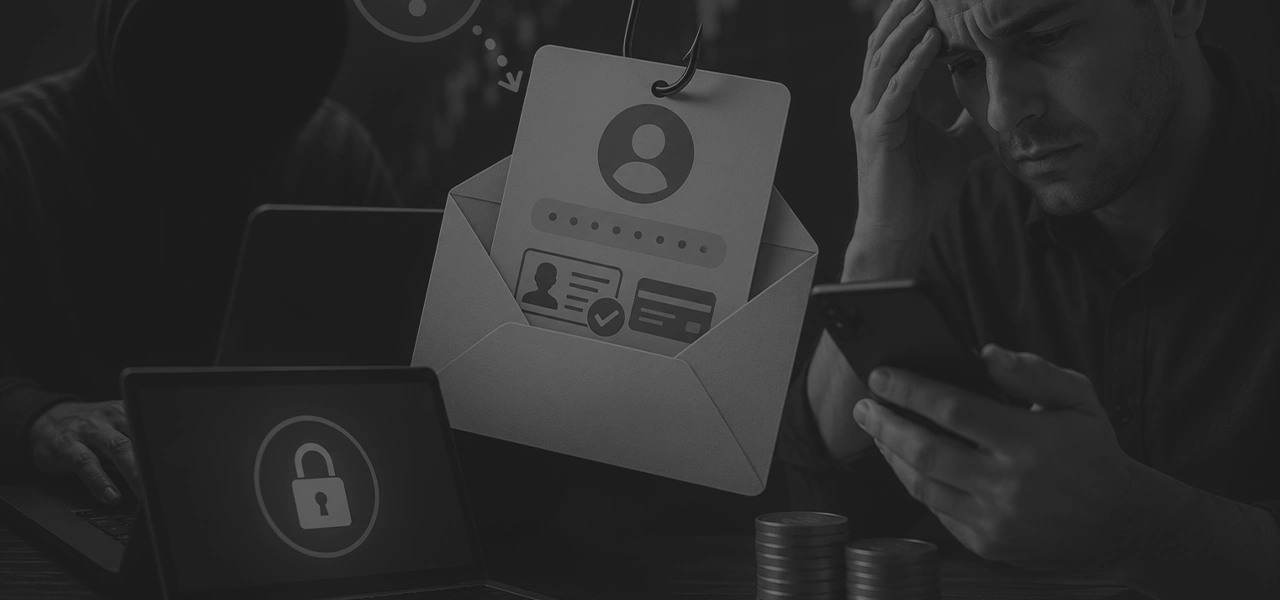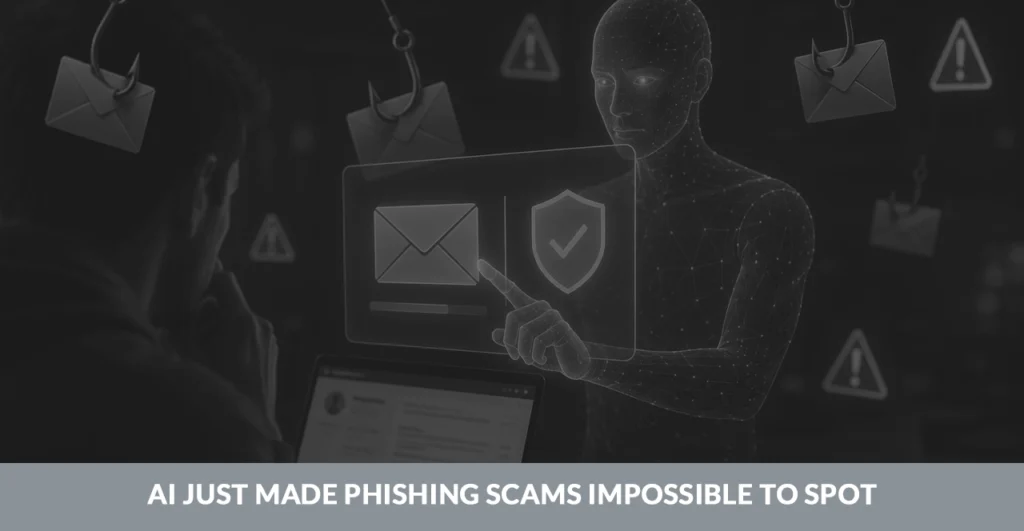
Phishing used to be easy to catch. Bad grammar, weird links, a sender name that didn’t quite match. Not anymore. The majority of people are unaware of how AI has altered the game.
The Old Rules Don’t Apply Anymore
For years, we all relied on the same tricks to spot emails. Verify the spelling. Move your cursor over the link. Watch out for that strange tone that seems to have been translated from another language.
Those signs are gone.
AI writes cleaner than most humans do. It is aware of the tone of your business, the writing style of your management, and even the email formatting used by your bank.
The fraud that appears in your email today may have flawless grammar, be personally addressed, and be timed to arrive while you’re preoccupied and not paying attention.
That’s the real shift. It’s not just that AI writes better emails- it’s that AI writes you better emails.
How AI Is Powering These Scams
- Cloned writing style: Scammers feed AI tools real emails- yours, your co-worker’s, your CEO’s- and the model learns exactly how that person types. Short sentences or long ones. Certain phrases they always use. It all gets copied.
- Deepfake voice and video: A brief phone call, a voicemail, or perhaps a video for social media. That’s enough for a scammer to impersonate your boss and request an urgent payment.
- Hyper-personalised targeting: Within minutes, AI can scrape a person’s business website, social network profiles, and LinkedIn profile. Then it builds a message that references real projects, real names, real deadlines. Most folks don’t think it reads or feels like a fraud.
- Perfect timing: Some systems now monitor times when people are more likely to act impulsively, including just after lunch, late on Friday, or early on a busy Monday.
Why This Actually Matters
This isn’t just a bigger version of the same old problem.
The whole reason phishing training worked before was pattern recognition. Look for red flags. Trust your gut when something feels off.
But when the message is polished, personal, and perfectly timed, your gut doesn’t flag it. That instinct we’ve all relied on for years no longer fires.
And it’s not only individuals at risk. Businesses are seeing AI-driven phishing used to bypass entire security teams because the emails don’t trip any of the usual filters. They look completely normal- because in every way except intent, they are.
Even those who are concerned about security are falling victim. The old checklist is no longer relevant, not because they are negligent. When scam detection technologies are trained on out-of-date red flags, they completely ignore the fresh ones. These AI-powered attacks reside precisely in that gap.
What Can You Actually Do?
You can’t out-spot AI. But you can out-process it.
Slow down on urgency. Any message pushing you to act right now- wire this, click this, approve this- deserves a second look. Urgency is still the scammer’s best weapon, AI or not.
Verify through a different channel. Got an unusual request from your boss or bank? Don’t reply to the email. Call them. Message them on a platform you know is real. A five-minute check can save you from a five-figure mistake.
Watch for small inconsistencies, not big ones. Since grammar and tone are no longer reliable red flags, look elsewhere. Does the email address match exactly? Is the request slightly outside someone’s normal role? Small mismatches still slip through.
Use tools built for this AI to help create this problem, but it’s also a part of the solution. Email security tools now use AI to flag unusual sending patterns, spoofed domains, and behavioural anomalies- things a human eye would miss.
Some banks and companies are even rolling out voice verification codes for exactly this reason, so a “verify by phone” call actually means something.
Talk about it openly. If someone at your company falls victim to an AI-powered phishing scam, don’t keep it quiet out of embarrassment. Sharing what happened helps others recognize similar attacks and makes future scams harder to pull off.
The Greater Picture
Phishing is not going away: in fact, it is developing more quickly than most individuals can keep up. To be honest, using “gut feeling” to identify fraud is no longer a solid defense.
The good news? Awareness is catching up. More businesses are educating staff members on AI-specific risks rather than just the traditional warning signs. Verifying before trusting is becoming more common.
It has nothing to do with paranoia. It’s about developing the practice of double-checking, particularly when something seems strange or important. Because the messages that are attempting to deceive you suddenly appear more genuine than ever.