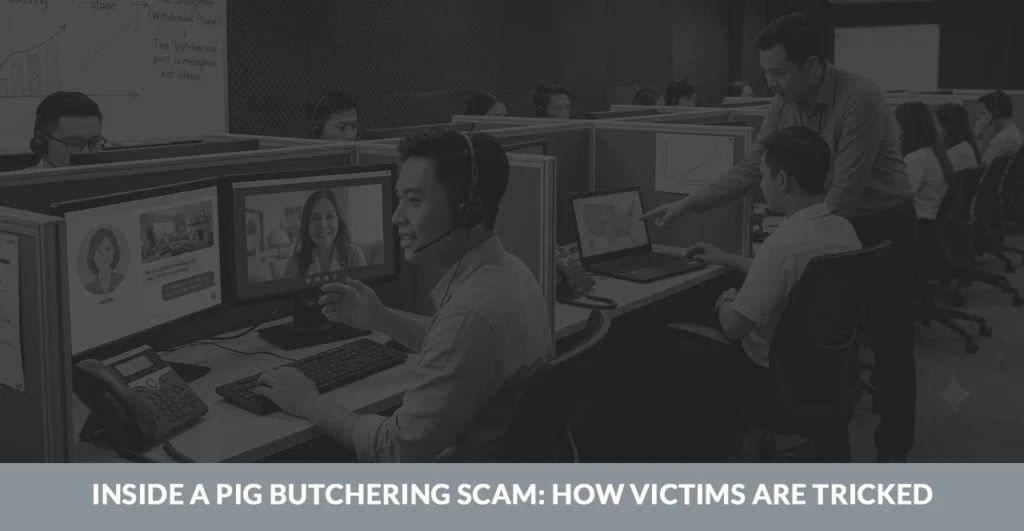
In the past few years, a different kind of online scam has been making its way across the world quietly and without drawing much attention. It doesn’t come with loud warnings, panic tactics, or obvious red flags. Instead, it unfolds slowly, often feeling like a normal conversation or genuine connection at first. Instead, it works slowly, patiently, and emotionally.
It’s called a pig butchering scam- a name that sounds strange until you understand how it works.
Victims aren’t rushed. They’re “fattened up” over time- emotionally and financially- before everything is taken from them.
Instead, it works slowly, patiently, and emotionally.
Step 1: How it All Begins
It usually starts with something simple.
A random message on WhatsApp.
A follow request on Instagram.
Or a “wrong number” text that unexpectedly turns into a conversation.
At first, nothing seems suspicious. It feels casual- maybe even friendly.
Messages are carefully planned. Scammers send them out in large numbers every day, hoping someone will reply unknowingly and take the first step into the trap.
Step 2: Turning a Chat into a Connection
It usually starts with something simple. Once you respond, things begin to shift- but not in an obvious way. There’s no talk of money, no pressure, no warning signs. Instead, the focus is on building a connection. They message regularly, keep the conversation going, and slowly become part of your daily routine.
They’ll casually share the pieces of their “life”- what they do to work, how their day looks, even photos that make everything appear real and put-together. Most of the time, they come across as someone well established- maybe a business owner, an investor, or a professional working overseas.
Over time, the interaction can feel more personal. In many cases, it even turns romantic.
They give you attention, kind words, and just enough care to make the connection feel genuine. And that’s exactly how they draw you in.
Step 3: When the Conversation Takes a Turn
After days or even weeks, the topic of money comes up, but in a very casual way. There’s no pressure, no direct ask. They simply introduce the idea and let it sit.
Before long, they offer to show you how it works- to guide you through it.
At that point, it doesn’t feel like a pitch. It feels like an opportunity being shared.
Step 4: The First Investment
After they guide you to a website or app that looks polished or convincing. At first glance, everything seems in place- a clean design, live market charts, even a customer support chat that responds quickly.
You decide to try it out with a small amount, then something unexpected happens- you see a profit.
When you try to withdraw, the money actually comes through.
That moment changes everything. Now it starts to feel real- and that’s when you begin to trust it.
Step 5: When the Pressure Starts to Build
Once trust is in place, the tone begins to shift. The encouragement becomes stronger and more frequent. They start nudging you to invest more.
- Now is the perfect time
- This opportunity won’t last
- I’m investing more too
Your account starts showing rapid growth
The number keeps climbing, and it feels like you’ve stumbled onto something rare.
But none of it is real.
Every number you see is controlled behind the scenes.
Step 6: When Things Start to Go Wrong
Scenes: When you try to withdraw a large amount, things change.
Suddenly, there are problems:
- You need to pay tax before withdrawal
- Your account is under review
- Deposit a fee to unlock funds
Every solution requires more money.
By this point, many people are already deeply invested- emotionally and financially.
Accepting that it might be a scam feels too hard to face. So they keep sending more money, hoping it will work out.
Step 7: The Sudden Silence
In the end, everything just stops.
The website no longer works.
The app suddenly crashes.
And the person you trusted is gone
No replies. No way to recover anything. No money left.
What once felt like a smart decision reveals itself for what it really was- a carefully planned illusion.
Why It’s So Easy to Fall For
Pig butchering scams are dangerous because they don’t look like scams at all. They work by taking a different approach- building patience instead of urgency, forming relationships instead of using threats, and creating trust instead of fear.
How to Stay Safe
A few simple checks can save you from a major loss:
- Be cautious of strangers who quickly become friendly or romantic.
- Never trust investment advice from someone you met online.
- Avoid platforms that are unknown or unverified.
- If profit seems too consistent or too good to be true, they are.
Closing thoughts –
Pig butchering scams are not just about money. They’re about manipulation, trust, and emotional control. That’s why anyone- not just the inexperienced can fall for them.
The best defence isn’t just awareness of scams, but understanding how they actually work. Because once you see the pattern, it becomes much harder to be fooled by it.